
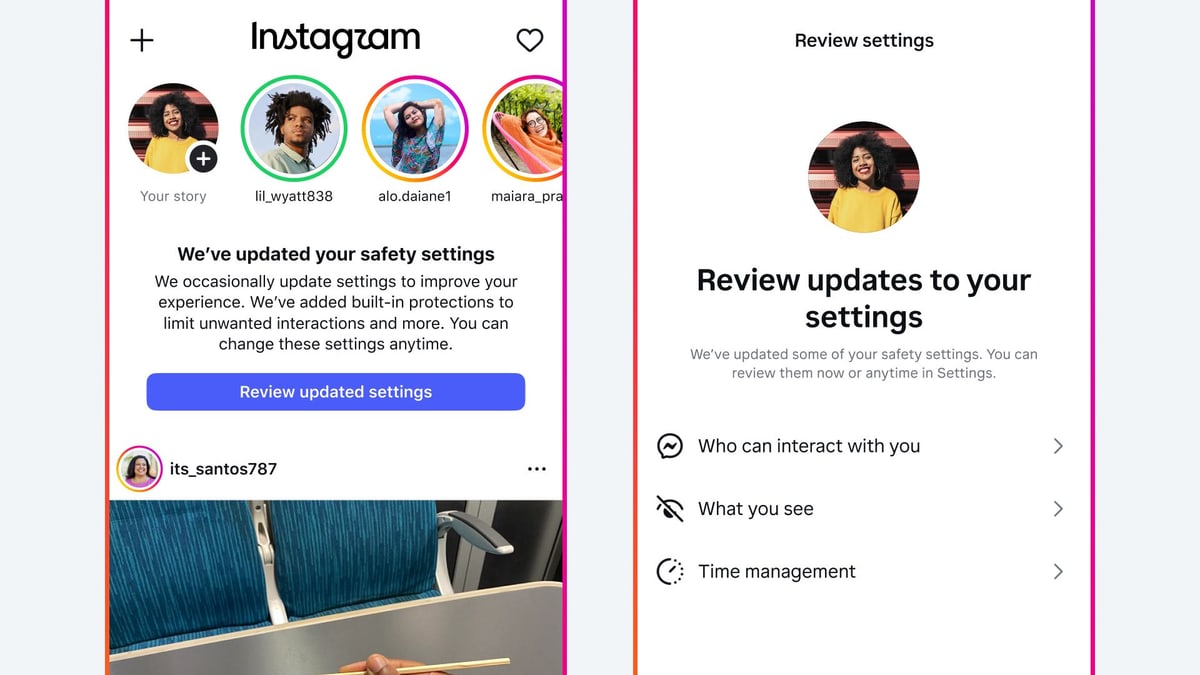
Meta said on Monday, Nov. 9, that it is expanding worldwide an AI system that looks for Instagram users it suspects are teenagers, even when they have given an adult birthday, and moves them into Teen Accounts. Teen Accounts are Instagram's stricter setup for users under 18. They automatically limit who can contact a teen, what content the teen sees and how long the teen spends on the app. Meta says some teens may give a false age online to get into parts of apps they are not old enough to use, and that the expansion will put millions more teens around the world into these protections.
The system is not new. Meta began testing it in the U.S. in April 2025 and widened it to Britain, Canada and Australia that September. In May 2026 Meta said the system had placed millions of accounts in those four countries into teen protections. It then brought the system to Instagram in the 27 European Union countries and Brazil, and said it aimed to reach the rest of the world during the year. On Facebook, Meta began using the system in the U.S. in May and planned to add Britain and the EU in June. It says that rollout is still going on, and it plans to start a similar system worldwide on Threads before the end of 2026.
Meta said in 2025 that people it places in teen settings by mistake can change their settings. But in May 2026 it said that when it suspects someone is lying about their age to escape these protections, for example by changing a birthday from under 18 to over 18, that person must prove their age with an ID or a face-based age estimate from the company Yoti. In November, parents in the U.S. are starting to get a notice on Instagram that explains how Meta places teens in these settings and how parents can help make sure their teen's age is right, along with a video in their feed about Meta's approach.
In Australia, Meta has also started using an age signal from Apple. When a parent sets up a phone for a teen, the parent can choose to have the app store confirm the teen's age and assign an age range. Each time the teen downloads an app, Apple then passes that range to the app's maker, confirming whether the teen is old enough for it. Meta says it uses the signal voluntarily, and that teens will get uneven protection across apps for as long as sharing and using it stays optional for app stores and app makers. Meta says it has long backed laws that would make app stores check ages and get a parent's consent.
Meta ties the expansion to its August 2026 agreement with 52 attorneys general from U.S. states, territories and the District of Columbia, under which it promised to get better at identifying teens and children under 13. That raises the stakes of the age check in the U.S.: in the states and territories that joined, the agreement gives users under 18 a default two-hour daily limit across Instagram and Facebook combined, which they can turn off only with a parent's permission. It also blocks the apps between midnight and 6 a.m. by default.
Meta has not said how accurate the system is, how many adults it has wrongly placed in Teen Accounts, or how many teens it has moved so far beyond its "millions" figure. Meta has said its tools for finding children under 13 look for clues such as birthday celebrations or mentions of school grades in posts, comments, bios and captions, but it has not said exactly which signals this teen system relies on. It says it is working to place teens in these protections "no matter where you live," but it has not given a list of countries.