
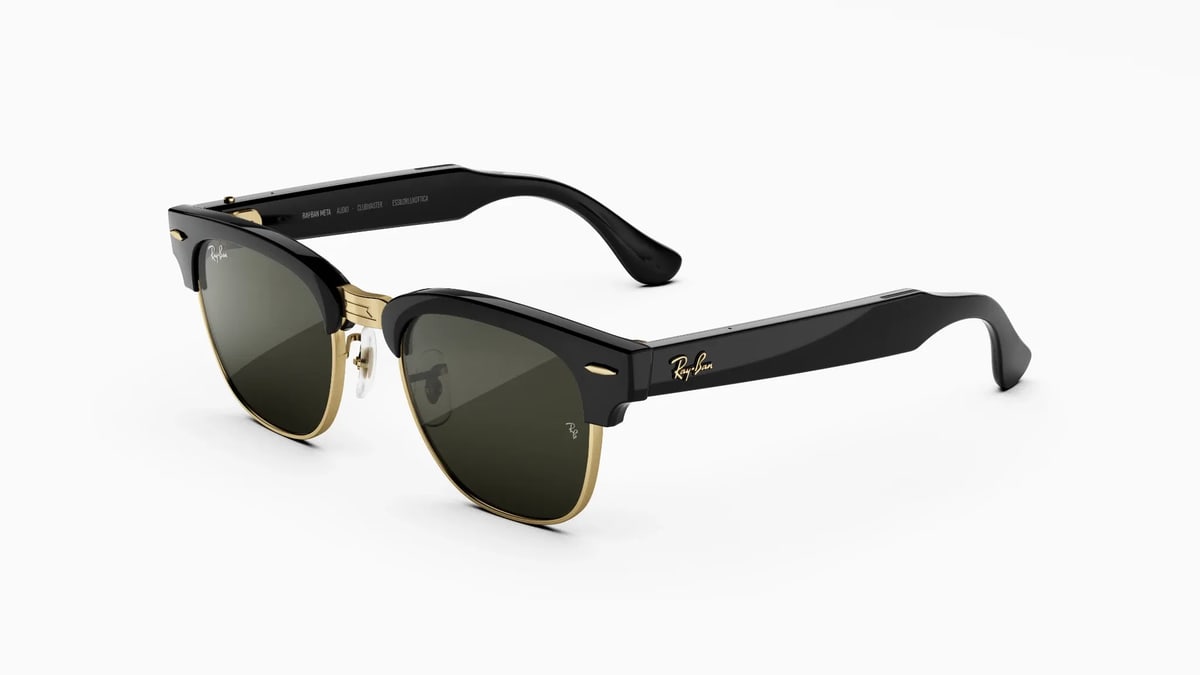
Meta's Ray-Ban Meta Audio glasses, which the company calls its first audio glasses, went on sale on Tuesday, Oct. 13, starting at $349 in the U.S. Meta announced them at its Connect event on Sept. 23. Open-ear speakers let wearers listen to music, take calls and talk to Meta AI, the company's assistant, without blocking out the sounds around them, Meta says.
Meta's camera glasses have drawn a growing backlash from people who worry about being filmed without knowing it, according to a news report, and the new pair drops the feature most tied to that worry. It still has six microphones, and it listens for the words "Hey Meta" to start the assistant, though wearers can turn that off and press a button on the right arm instead, according to a news report. The same report says the glasses have no built-in way to record a conversation, and features that use sound, such as live translation, have to be started by hand.
Meta says the glasses weigh as little as 43 grams, making them its lightest AI glasses, and last up to 12 hours on a charge, or up to six hours of nonstop listening. They come in two Ray-Ban styles, Clubmaster and Burbank, and every one of the 23 frame and lens combinations can be ordered with prescription lenses. Meta's Ray-Ban Meta (Gen 3) camera glasses, launched at the same event, start at $449 and last up to nine hours on a charge, Meta says.
One early review found the AI on board limited for now. Most Meta AI features, including live translation and walking directions, still work without a camera, according to a news report. But the glasses ship with a simpler version of Meta's AI called Muse Spark, which handles short requests such as checking a calendar or setting a reminder but gets confused by more complex ones, according to another. Meta says the glasses will connect to Muse, which it calls a personal AI agent: AI that can carry out tasks on its own, such as using apps and websites, instead of only answering questions. Meta says Muse will help people with things like building healthy habits or keeping up with a busy calendar without reaching for their phones.
Removing the camera does not settle every privacy question. Meta keeps audio recordings from its glasses and no longer lets U.S. users opt out of that, though recordings can be deleted by hand in the Meta AI app, according to a news report. Meta has not given a firm date for bringing Muse to these glasses, saying only to expect it in the coming months.