
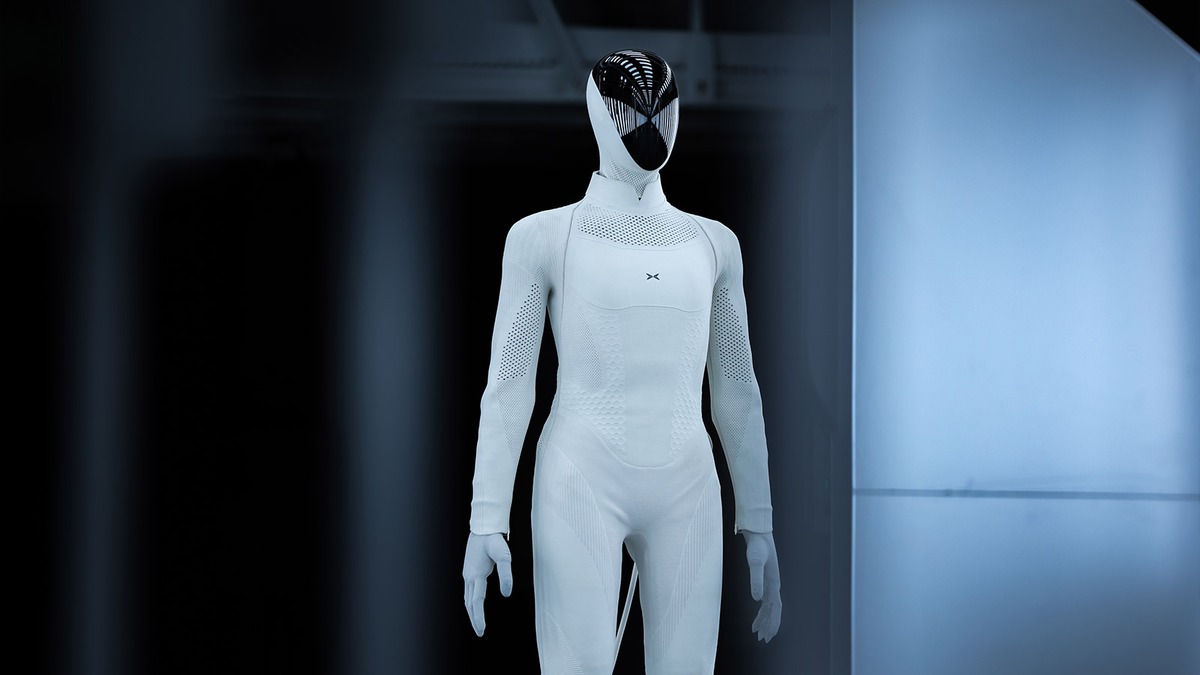
XPENG said on Sept. 8, 2026, that it had officially commissioned its humanoid robot production lines and that the first advanced general-purpose IRON autonomously walked off after completing production, a move the company framed as a leap from research-and-development prototyping to line manufacturing. The walk-off matters because it is a rare public manufacturing-readiness signal for a Chinese EV maker extending automotive-grade quality systems into humanoid robotics, rather than another stage demo alone.
The confusion to clear: line commissioning is not mass production. CnEVPost, covering the same announcement, said the commissioning does not mean IRON has entered mass production and that XPENG reiterated a year-end mass-production target, with initial deployments at its own stores and campuses and official China and overseas launch and delivery planned for 2027. XPENG's claim that IRON is the world's first advanced general-purpose humanoid to walk off such lines is a company claim, not an independently verified industry ranking.
According to XPENG's pressroom and PR Newswire release, the lines automate more than 80% of core processes and were built to automotive-grade quality standards with no manufacturing precedent to copy. Chairman and CEO He Xiaopeng said the robot production lines were created from scratch. Company specs put IRON at 76 degrees of freedom, including 21 per hand, and say three Turing artificial intelligence chips deliver up to 2,250 TOPS so a Physical AI foundation model can run on the robot without remote operation.
Xinhua independently reported that IRON completed automated final assembly and walked off on its own at the Tuesday launch, and that first deployments would target stores and internal parks with China and overseas sales targeted for 2027. TechNode noted the same line-operations claim and placed it beside XPENG's recent robotics fundraising of more than $900 million at a post-money valuation above $6.3 billion, figures that remain company and financing disclosures rather than proof of volume shipments.
What remains open is whether year-end mass production clears on the timeline XPENG states, what line capacity and pricing the company will disclose, and whether store and campus rollouts look like supervised pilots or unsupervised work. Until those shipments are documented outside company channels, treat the walk-off demo, the automation percentage, and the 2027 delivery roadmap as parallel company-backed facts rather than proof that volume humanoid production is already live.