
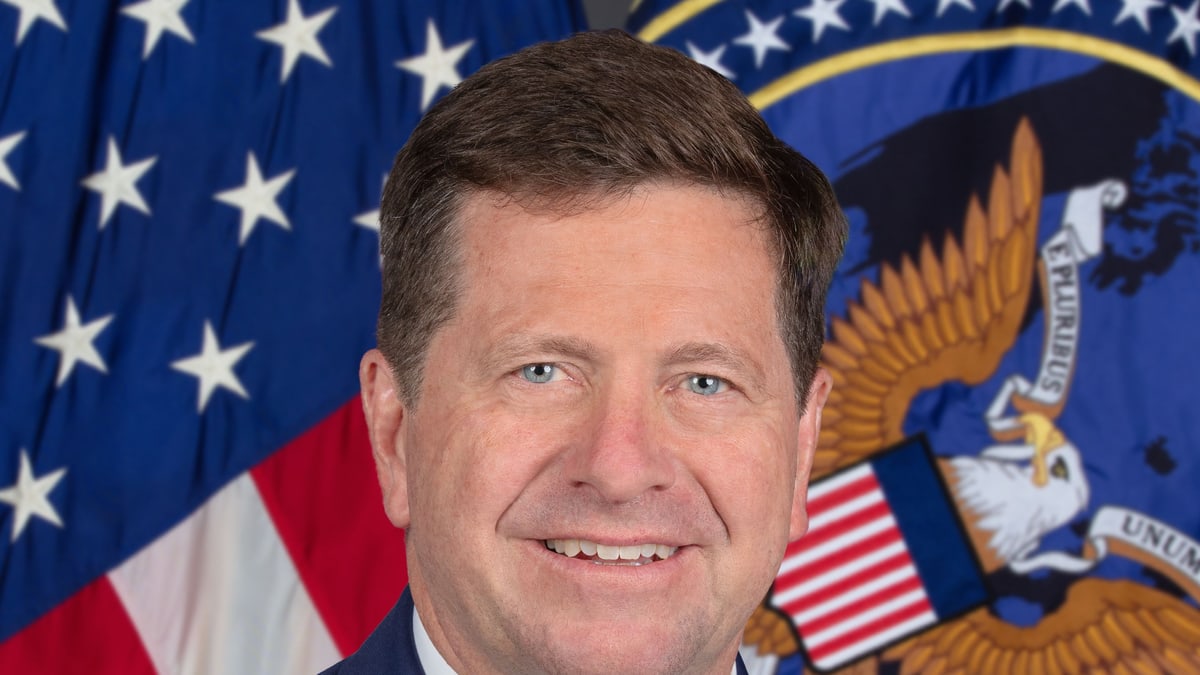
President Donald Trump on Sunday, Oct. 4, announced a new federal team to coordinate the government's work on AI, which he calls the Super Intelligence Force. He wrote that it is "tasked with coordinating the effort of the Federal Government to ensure that America continues to lead the World in Super Intelligence." Director of National Intelligence Jay Clayton, who oversees the country's spy agencies, will lead it, making him in effect the administration's top AI official.
Three others will help lead the team: Federal Trade Commission Chairman Andrew Ferguson, Office of Personnel Management Director Scott Kupor, and Emil Michael, the Pentagon's under secretary for research and engineering. The team reports to Trump and his chief of staff, Susie Wiles. Trump wrote that it will coordinate the government's dealings with consumers, public interest groups, religious organizations, operators of critical infrastructure, and the AI companies themselves. He announced it after six tech leaders signed a voluntary safety pledge at the White House on Sept. 29.
"Super Intelligence" is the administration's new name for AI. A Sept. 29 executive order told federal agencies to use it, and the short form "SI," in place of "artificial intelligence" and "AI," and defined it as the same technology federal law already calls AI. In the tech industry the word usually means AI much smarter than people, a goal no one has reached. The order's name covers the same tools agencies already use.
Clayton has said the team will have 120 days to report on the risks and opportunities of AI and recommend what role the federal government should play, according to a news report. The same report says it will review how the government learns about AI-related breaches, hacks and other incidents, and suggest ways to respond better using powers agencies already have. Ferguson's agency confirmed on Sept. 30 that it is investigating OpenAI, Anthropic and other AI companies over possible risks to consumers, according to a news report.
Michael wrote that the Pentagon is "putting the most advanced SI capabilities into the hands of our warfighters at speed and scale." His office says the military's own internal AI platform has grown to more than 1.7 million users in under a year.
The White House has not published an order or charter for the team, and it has not said what budget or staff it will have. Nothing announced so far lets the team write new rules for AI companies, so its work may mainly shape how agencies use and oversee the technology rather than set binding limits.