
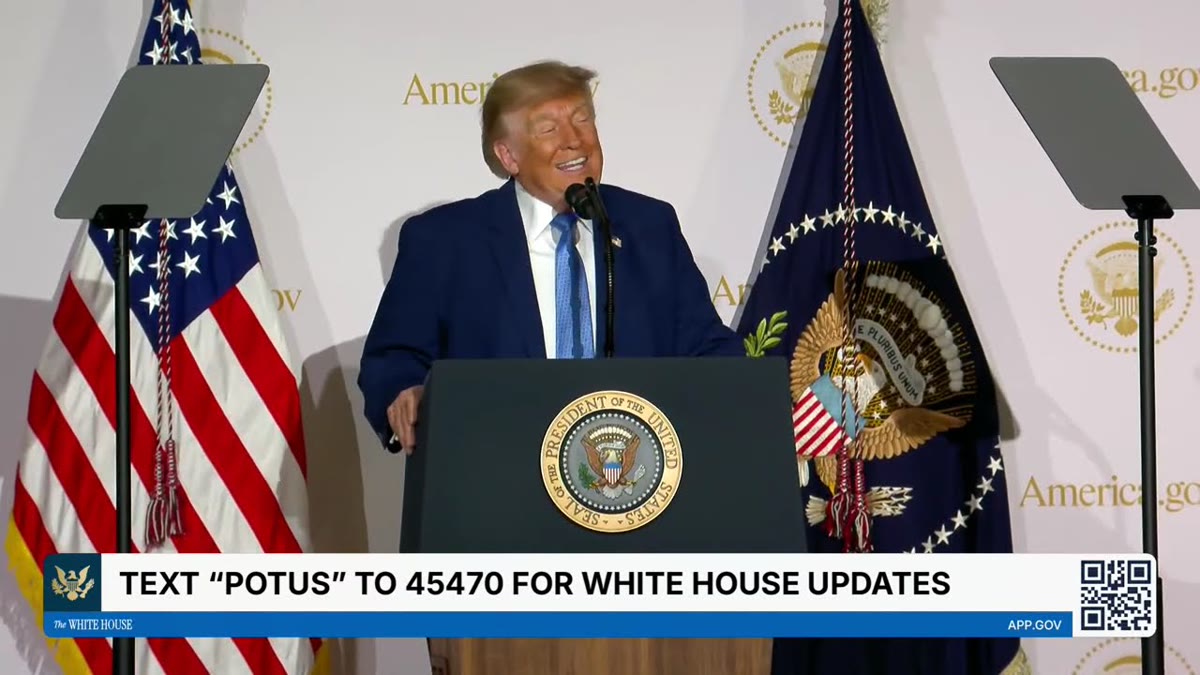
The leaders of six major tech companies signed a voluntary pledge at the White House on Tuesday, Sept. 29, promising to police the safety of their own AI. President Donald Trump, who signed it too, called it "almost like a constitution" and "morally binding." But the pledge is not a law. It says "every company is responsible for developing its own technology safely."
Google's Sundar Pichai, Anthropic's Dario Amodei, Meta's Mark Zuckerberg, OpenAI President Greg Brockman, xAI's Elon Musk and Nvidia's Jensen Huang signed it during a White House lunch with Trump and House Speaker Mike Johnson. "I think I'm seeing tremendous self-policing. And they understand that they have to self-police," Trump told reporters afterward.
The pledge, titled the White House Accord on Super Intelligence, asks each company building the most advanced AI to set up four layers of controls and audits. First, it should closely monitor what its AI models can do and whether they act as intended, in areas such as cybersecurity and biological and chemical threats. It should also make sure the models do not hack into or reach computer systems in ways no one intended. Second, an internal team should check that those controls work and that problems get fixed. Third, an independent outside auditor should test them too. Fourth, an independent committee of the company's board should review the reports.
The pledge says the companies "will meet regularly" to set safety standards. It adds: "Over time, it may make sense to codify these steps into laws or regulations." It sets no penalty for a company that falls short, and according to a news report, some of its steps are things the companies already do in some form or had promised before.
Zuckerberg called the pledge "a start and an accord that the whole industry could come to." That afternoon, Vice President JD Vance said companies should take AI's risks seriously rather than "come to the government for a regulatory regime that may make things worse if it's not smart and careful." Amodei said the technology "has very real risks" and how to address them "is still under discussion."
Hours later, Trump signed an executive order telling federal agencies, where the law allows, to say "Super Intelligence" and "SI" instead of "Artificial Intelligence" and "AI," and to stop acknowledging the old terms. The switch covers official letters, websites, reports, policy papers and other "non-statutory documents," meaning documents other than laws passed by Congress. Past regulations and contracts do not have to change. The White House says the new name better captures what today's technology can do.
In the tech industry, superintelligence usually means AI much smarter than people. The order instead defines Super Intelligence as the same technology that federal law already calls artificial intelligence, so the new name changes the word, not what it covers. It gives the president's science and technology adviser 60 days to propose wording for a law defining Super Intelligence, including whether that definition should change or replace the current legal definition of AI. Trump also said he would name someone to oversee the pledge. On Oct. 4 he put Director of National Intelligence Jay Clayton in charge of a new White House team on AI, though the White House has not said whether that team oversees the pledge. Whether lawmakers will turn the new definition or the pledge's steps into law is not yet clear.