
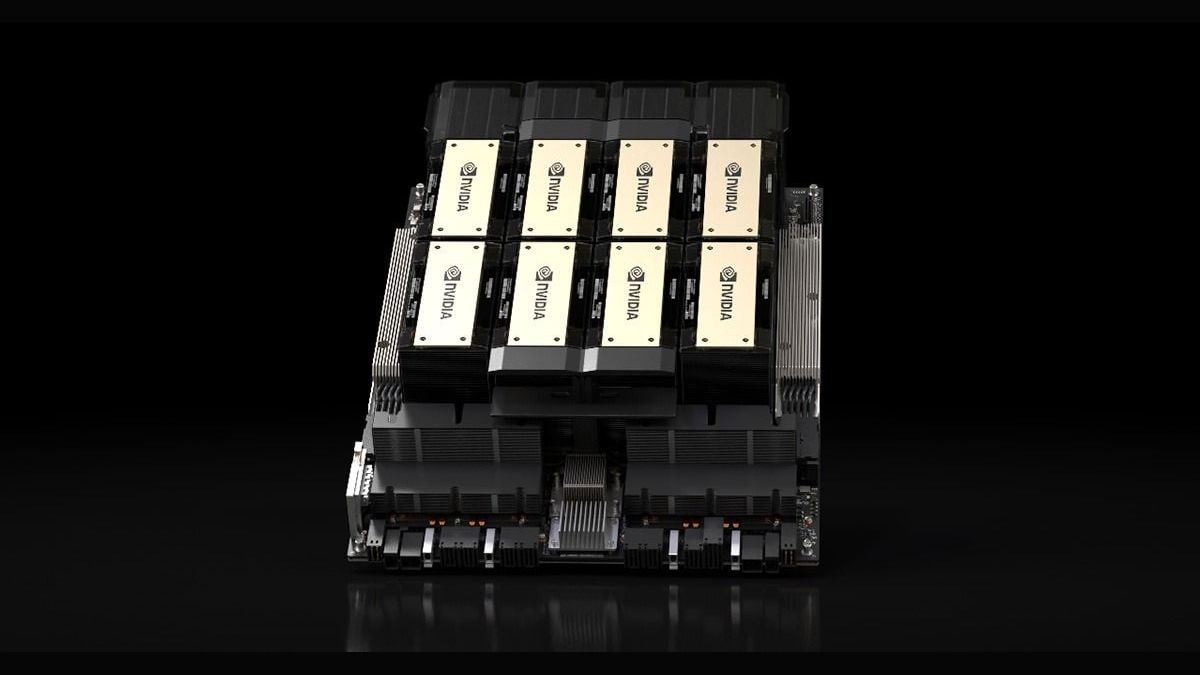
The House Foreign Affairs Committee on Thursday, Nov. 19, released the U.S. Commerce Department's records of requests to sell two advanced AI chips, NVIDIA's H200 and AMD's MI325X, to Chinese companies. Committee Chairman Brian Mast used a power in the Export Control Reform Act that lets the committee release companies' confidential export records when it decides that keeping them secret is against the national interest. Committee members voted to release them, according to a news report. The committee calls it the most detailed public disclosure in the law's history.
The sales became possible after President Trump said on Dec. 8, 2025, that the United States would let the H200 and similar chips ship to approved customers in China. On Jan. 13, 2026, the department's Bureau of Industry and Security, which decides who may export sensitive technology, began weighing each request case by case. Under the bureau's rule, a seller must show the sale won't eat into the world's chip-making capacity now available to U.S. customers. The seller must also show that the Chinese buyer has export compliance procedures, including screening its own customers, and that the chips passed independent testing in the United States of their performance and security.
By May 11, the bureau had received requests to sell 3,444,160 of these chips to Chinese companies, according to a bureau summary of that date released by the committee. It had approved 879,868 of them across 21 applications. The approvals include 150,000 chips for Tencent and its subsidiaries, 75,000 for Alibaba, 43,000 for Baidu and 4,000 for the carmaker BYD. Alibaba and its subsidiaries had asked for 948,950. Some requests were for the companies' units in Malaysia, Indonesia and Thailand, while every approval was for chips located in China. The committee notes that all four companies are on the Pentagon's June 2026 list of Chinese military companies. Approved recipients also include ByteDance and Tesla's Shanghai arm.
The records list each of the 21 approvals as "Approved, not shipped" as of May 11: the sales were cleared, but the chips had not been delivered. The records do not show what has shipped since. When NVIDIA reported its quarterly results on Nov. 17, it said its sales forecast for its current quarter assumes no sales of its data center chips in China.
The committee also points to the companies NVIDIA named to set up the chips in Chinese data centers. Of the NVIDIA applications the committee received, all but two name Maginfra, Beijing New Matrix Information Technologies, ZTE Kangxun Telecom and Lenovo or its units as companies that "may install the systems in the datacenter." Aivres Systems and three other companies are named for the same role on several NVIDIA applications. The committee says public reports have raised questions about whether chips handled by Maginfra, Beijing New Matrix and Aivres could be passed on to buyers or places the license does not allow.
Every NVIDIA and AMD application the committee received said the risk of the chips being diverted was "low." The committee's release says the records include NVIDIA requests "to depend on possible chip-smuggling fronts." At the committee's meeting, Mast called Maginfra and New Matrix "fake companies," according to a news report. NVIDIA, AMD, the Commerce Department, Maginfra and New Matrix did not immediately respond to requests for comment, the report says.
Many other requests were still waiting for a decision on May 11, and the bureau had turned down one, an AMD request to sell 75,000 chips to UCloud. Nine others, including a request for 610,000 chips for Alibaba Group, carry a status the records abbreviate as "RWA" and do not explain. The committee says it also has other applications the summary did not fully reflect, such as an NVIDIA request on Dec. 19, 2025, to sell 445,000 H200 chips to Tencent. Jensen Huang, NVIDIA's former chief executive, is due for a closed-door interview with the committee and two others on Dec. 1, according to a news report.