
Before a robot reaches for something, some AI systems let it play out its options in its head: if I move this way, what happens? Researchers at Nanjing University say these imagined previews can look accurate overall yet blur the differences between one move and the next, which makes choosing hard. Their method, AD-WM, trains the robot's imagination to keep those differences. Picking the right move is the whole point of planning ahead.
The trouble is that most of what a robot's camera sees stays the same whichever way the arm moves, so a model can look accurate just by predicting that little will change. It is like asking for directions and hearing that the street will look about the same whichever way you turn: usually true, and no help at all. AD-WM trains the model to focus on the change each move causes, and quizzes it along the way: from its own before-and-after prediction, can it work out which move was made? The quiz is dropped once training ends, so the robot plans the same way as before.
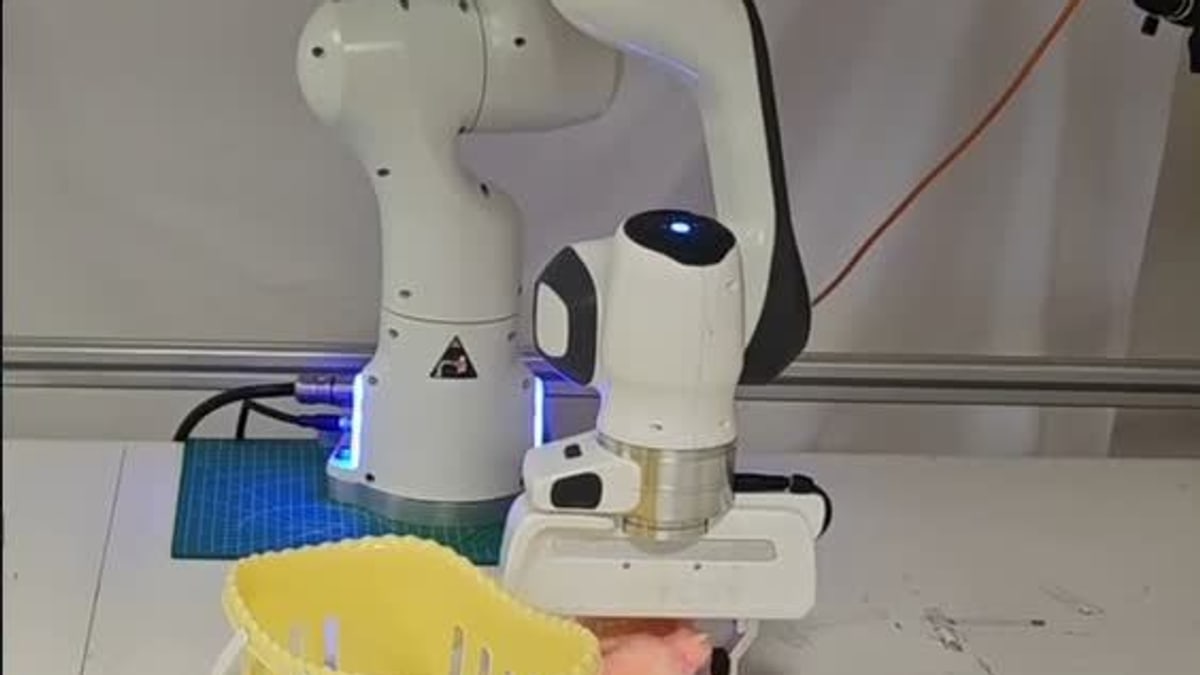
On a real robot arm, the team reports that simple jobs of picking up an object and placing it succeeded about seven times in ten with AD-WM, up from about four in ten for a matched version without it. Its model was not trained on any images or demonstrations from that lab. It was also tested on placing a Labubu doll in a basket and on picking out objects shown in goal pictures, where it again did better, though those tests were small. The researchers' lesson for anyone building robots that plan this way: a model's predictions should capture the differences between moves, not just look accurate.
The team has posted its simulation code and trained models online under a free, open license, though the real-robot code and model are not part of that release. In the real-robot tests, a person supplied a picture of each goal along the way, such as the grasp and the drop-off, and every trial ran in the same lab with the same camera. The researchers say their next step is to try broader settings and rely less on those hand-picked goal pictures.
The gains were not across the board: in simulation, one task, pushing a T-shaped block into place, got slightly worse. And the robot clips on the project page are selected examples, not a full record of every try.