
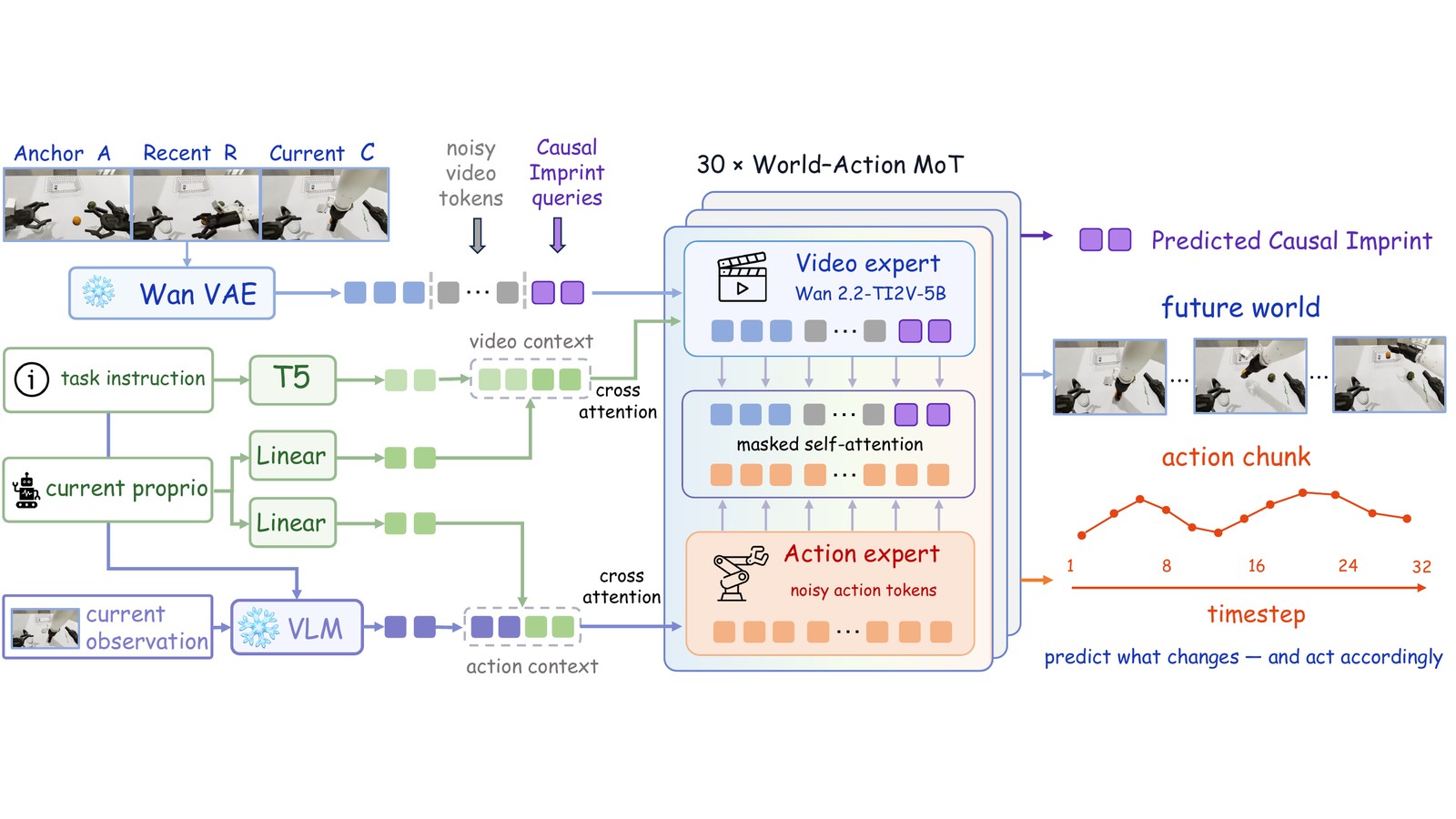
A team at InternRobotics described InternW0-Delta in a paper posted on Sept. 25, 2026. It is a world action model, an AI model for robots that predicts how a scene will change and which moves the robot can make to shape it. The researchers say that, to their knowledge, its training data, more than 20,000 hours in all, is the largest open collection of its kind, and they plan to release it, which would give other robot builders a large shared pool to learn from.
The new step is a training method the researchers call Causal Imprint. During training, the model is shown what actually happened next in each scene and learns which coming changes matter. When the robot is working, the model hands those predictions straight to the part that chooses its moves, without first generating a video of what comes next.
InternW0-Delta brings several kinds of knowledge together in one model: how scenes in video tend to move, what the objects in a scene are, the 3D shape of things and how they move, and how to turn all of that into robot movements. One part of the model handles video and another handles actions, and the two work together.
To train it, the team pooled robot demonstrations, first-person recordings of people and other robot-learning data, and converted them into one shared format. They say they will release the code, the trained model, the software they used to prepare the data and the processed data itself, where licenses permit.
The researchers report that it did better than earlier robot AI models on standard tests, both in simulation and on real robots. Those results come from the team's own runs, and no one outside the lab has tested the model yet.