
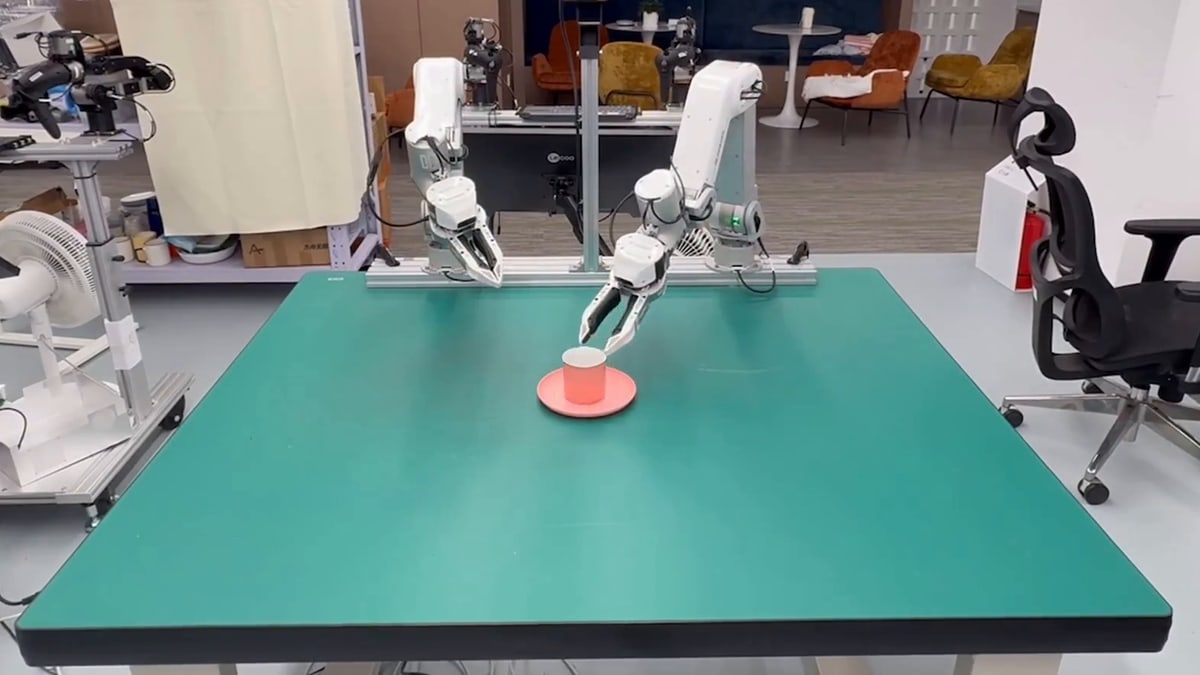
X Square Robot, a Chinese robot maker, posted a film on Nov. 23 of robot arms stacking things, using tools and handling things that bend or fold. A single AI model runs every clip, the company says, and the clips are sped up. WALL-OSS-1.0 is the newest in a line of the company's vision-language-action models: a robot model that combines what the robot sees with instructions in words and turns them into movements.
Robot AI usually needs more practice for each new job, the company says. Its broad first round of training is only a starting point. X Square Robot says its model can follow new instructions with unfamiliar objects, tools and table layouts, and on different kinds of robots, without that extra training.
To test it, the company let its own evaluators pick the tasks freely and ran the model on real robots with no extra training for any of them. Across 312 different tasks, the arms succeeded a little over half the time, it says.
The company has also built a planning program to work with the model. In a demo, it took a broad request, "Clean up the table," and broke it into steps the model then carried out: collect the fruit, tidy up the small things, stack the plates.
For a fixed job, the model still needs some practice, but far less. The company says it used the model to sort parcels for a logistics customer it does not name, and a robot starting from WALL-OSS-1.0 needed about a hundredth as many hours of examples as one that learned the job from scratch.
These results come from the company's own tests, and no outside group has checked them. They also mean the arms fell short a little under half the time. A smaller version ranked first among similar robot AI on a public ranking of tests in simulation, as of early November, but no one outside the company has yet shown how the full model does on real robots. For now, developers and researchers apply by email for a key to run the model over the internet on a short list of supported arms, including some from other makers. The company says it will soon let anyone download the model itself.