
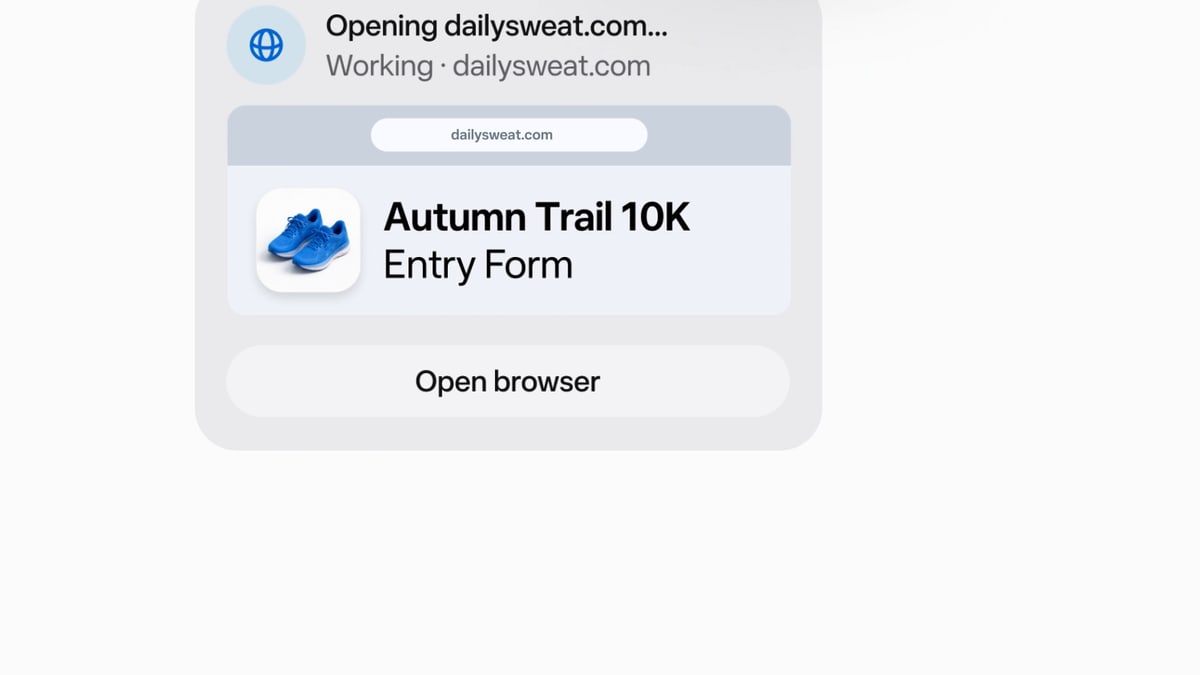
Meta has opened Muse, its personal AI agent, to anyone 18 or older in the UK, on iPhone and Android, on the muse.ai website and inside WhatsApp. An AI agent is AI that can carry out tasks on its own, such as using apps and websites, instead of only answering questions. Meta says Muse can send an email, book travel, fill out forms on websites and chase a refund, and that it keeps working after the app is closed. It is free up to a usage limit, Meta says, with subscription plans for those who want more use. Muse first launched in the U.S. in September and reached Australia on Nov. 17.
Meta says it is working with British partners, including Marks & Spencer, Debenhams Group, Currys, Ocado Retail, Trainline, Argos, Sainsbury's, ASOS, Jet2 and easyJet. With some, people can connect their own accounts so Muse can reorder their usual shop or pull up a booking, Meta says; with others, Muse can find its way around their websites from the first day. Muse also works with global services such as Spotify and OpenTable, and Meta says PayPal is coming soon. To pay, Muse can use Onelink, built by Stripe, which Meta says makes a separate digital version of a person's card that only AI agents using Onelink can reach, or Shopify's Shop Pay at supported stores.
Correction (Nov. 25): an earlier version called the payment wallet Link. Meta's post now calls it Onelink.
Meta says Muse shows exactly what it is about to do and waits for a go-ahead before it sends an email or buys something. Purchases always need approval; for other tasks, people can choose to let Muse act without asking each time. A separate security agent checks Muse's actions, and the information it sends out, against the permissions a person has granted, the company says. Meta says Muse cannot see people's passwords or payment methods, and that conversations with Muse are not shared with Meta's advertising systems. Each Muse runs on its own virtual computer in the cloud, a private machine on remote servers, which Meta says keeps a person's information and logins apart from Meta's other services.
People can sign up with a new account or with their Meta account. When they use a Meta account, Facebook, Instagram and Threads are connected automatically if those accounts are linked in Accounts Center, Meta's settings page for managing them together, and Muse can use what the person can already see there. The setting that lets Meta use Muse conversations to improve its AI is on from the start and can be switched off in Settings, Meta says. When the setting stays on, Meta says it removes details such as names, email addresses and phone numbers, and it does not use conversations that contain private messages, such as emails or Instagram direct messages, to train its AI models.
On Oct. 30, before Muse arrived in the UK, four UK regulators, including the Competition and Markets Authority and the Financial Conduct Authority, said in a joint statement that did not name Meta or Muse that personal AI agents could change how people use digital services but "may amplify and accelerate risks." They named fraud and scams, personal information shared in ways people don't expect, and misleading recommendations. The regulators said existing consumer, competition and data protection law already applies to these agents. Meta says it has engaged with the appropriate regulators. According to a news report, Meta employees had raised concerns about how the app performed. Meta said internal testing lets it add safety and privacy protections before it releases anything, and the report says most of the problems came from a bug that has since been fixed. Meta's own terms for Muse warn that its actions may contain errors, may not work as intended and may not be reversible, and that users bear the risk of any money lost through actions it takes. It is not yet clear how reliably Muse handles real errands, and Meta has not said how many people use it.