
NVIDIA introduced GR00T 2, the next generation of its GR00T robot models after GR00T 1.7, at the Conference on Robot Learning in Austin, Texas. It is a world action model, an AI model for robots that predicts how a scene will change and which moves the robot can make to shape it. Because it learns by predicting how a scene will change, NVIDIA says, it can learn from video of people, and a small add-on for each kind of robot turns its plan into motor commands. NVIDIA says versions of it run on robot arms with simple grippers, robot hands with five fingers and humanoid robots.
GR00T 2's training mix holds 402,730 hours of video from cameras worn by people at work, 10,184 hours of people using a handheld gripper, and 23,500 hours of recordings of people steering robots remotely, as with a remote control. NVIDIA trained four versions of the model on none, 1%, 10% and all of that video of people. On 72 tasks, the share of each task the real robot completed rose from 50% to 70%, NVIDIA says.
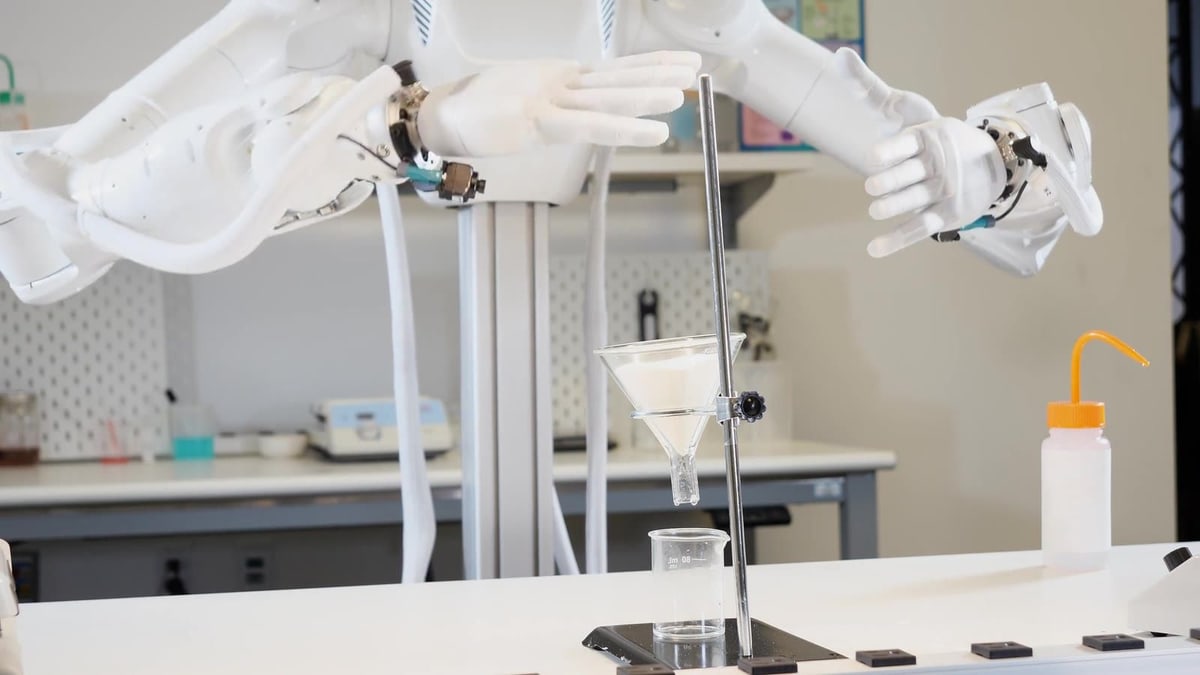
Trained on recordings of people doing a lab task, never on the robot, a robot with two five-fingered hands lined a funnel with filter paper and wet it with a wash bottle in 65% of tries, NVIDIA says. That was the best of four tasks taught this way, and the others ranged from 10% to 50%. GR00T 1.7 managed none of the four. On 50 tasks that appeared only in video of people or in other robots' recordings, never in that robot's own, GR00T 2 succeeded in 40% of tries with no practice. With one demonstration of each task on the robot, success rose to 71%. With five, under 3 minutes of robot recordings per task, it rose to 95%. Each time the model got 30 minutes of extra training to adapt it to the job, on a single RTX 5090 graphics card.
NVIDIA also made a smaller version, GR00T 2 Turbo, that runs on the computer inside a Unitree G1 humanoid. Running on that robot, it scooped and served popcorn in all 48 of NVIDIA's tries.
Foxconn is applying GR00T 2 to factory work building servers, Siemens is evaluating it for industrial jobs, and Nexuni is testing it for laundry handling, NVIDIA says.
When the model failed with no practice, NVIDIA says, it usually did the right steps in the right order but fell short on precision at one of them. So far, all of these results come from NVIDIA's own tests. NVIDIA calls GR00T 2 open, and its project page says the code will be available in December 2026. The page does not say when the trained model itself can be downloaded. Part of the training video, 100,000 hours of it, is already free to download.