
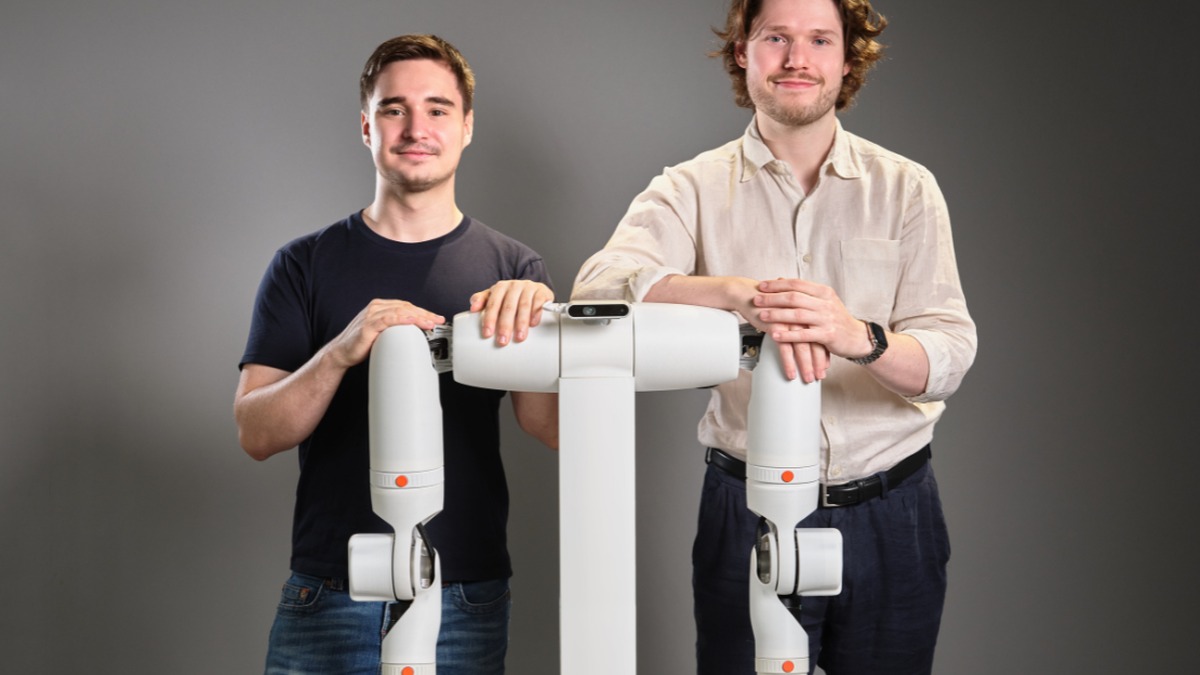
Tokyo-based O-ID has raised $1.2 million in pre-seed funding to move a modular industrial humanoid from prototype toward production. Japan's factories face a deepening shortage of workers, and the company says a single failed part on today's general-purpose humanoids can idle a machine for months. Its pitch is joints, limbs and computer units that can be swapped out quickly, so a worn module is replaced on the floor in minutes instead of the whole robot being shipped out.
O-ID said on Sept. 24, 2026, that Chicago firm TAWANI Ventures led the round, with Hustle Fund, Techstars and angel investors also taking part. Techstars published a spotlight on O-ID the same day with the same $1.2 million figure and the same pitch of robots repaired by swapping modules. O-ID's own website presents its robots as made-in-Japan humanoids with swappable modules for manufacturing, logistics and inspection.
O-ID also announced a letter of intent with Sumitomo Electric Industries. The two sides plan to discuss using Sumitomo Electric wire-harness technology, the bundled wiring that carries power and signals, in humanoid robots. A letter of intent opens talks; it is not a signed supply deal, and Sumitomo Electric has not issued its own announcement about O-ID.
Co-founders Stian Jakobsen (CEO) and Simon Gormuzov (CTO) met at Waseda University and founded O-ID in Tokyo in 2025. The company went through the Techstars Tokyo startup program that year. It says its first deployments will target Japanese car manufacturing and logistics, with the United States to follow, and that it has filed a provisional U.S. patent on its modular connector technology.
It is not yet clear how quickly O-ID's prototypes will become robots that factories pay for, or what the Sumitomo talks will produce. For now, the round is a small bet on a made-in-Japan modular design, not proof that humanoids with swappable parts already run a production line.