
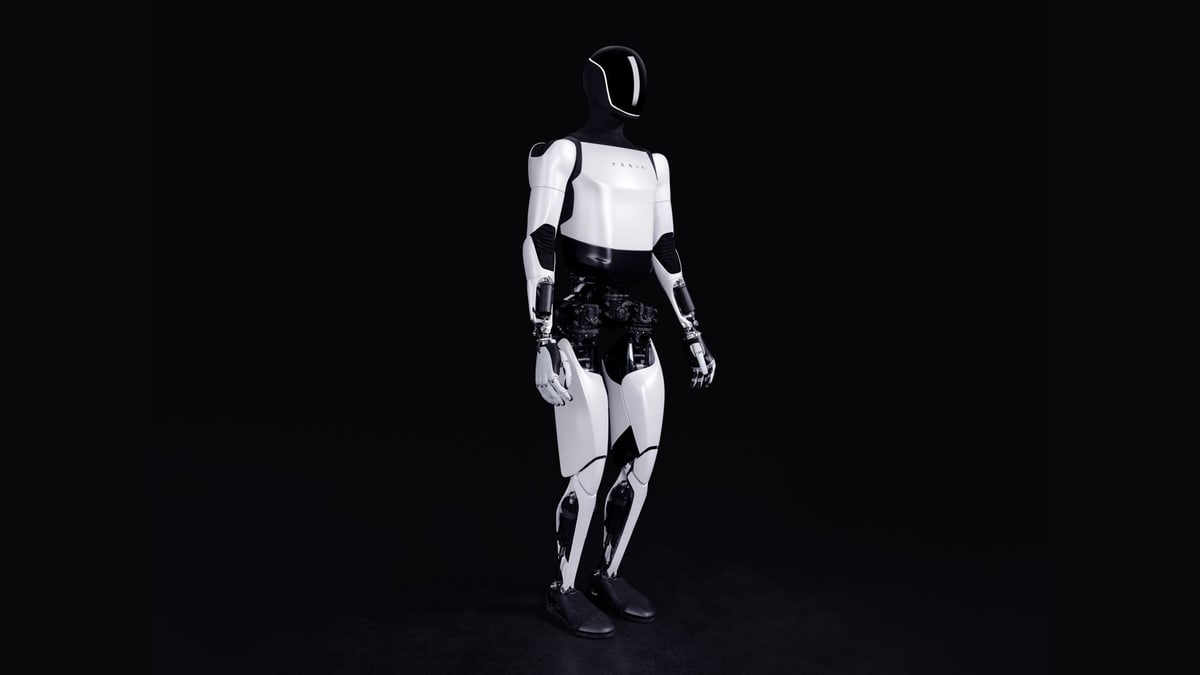
Tesla has started building its Optimus robot at its factory in Fremont, California. Optimus is a humanoid robot, built in a human shape and made to walk on two legs. In its letter to shareholders on Wednesday, Oct. 21, Tesla said production began there on what it calls "high-volume lines." The robots are built in a part of the factory that once made electric cars, according to a news report. The company says the robots coming off the line are "the first production-quality bots that we have manufactured."
Turning out robots on a factory line means every part and step has to come out the same way each time. Tesla says it will keep changing both the robot's hardware and the way it is made, but says it has proven that its current way of making the robot "is suitable for a commercial product." In a table of its factories, Tesla lists the Optimus line in California as in its "Early Ramp" and gives no figure for how many robots it can make, noting that what a factory is built to make is not the same as what it turns out. It lists a second Optimus factory, in Texas, as under construction.
The robot also needs software that lets it work on its own. Tesla says it plans to have 400 megawatts' worth of computers training its AI by the end of 2026, up from about 265 megawatts at the end of September. Tesla measures that computing in megawatts, a unit of electric power. The AI is meant to let both its cars and its robots act on their own.
On a call with investors, Tesla's chief executive, Elon Musk, added caveats, according to a news report. He called this "early production" and said output would grow slowly and be "somewhat bumpy because it is such a radically new product." He said Tesla still needs to change parts of the design so the robot is safe and reliable and doesn't wear out after a month, and that "there's still quite a lot of work to do with regard to the AI and the robot for it to be truly useful for open-ended tasks," the report says. Musk also predicted Tesla would be able to make 20,000 robots a week by the end of 2027, the report says, a goal the shareholder letter does not mention.
Tesla did not say how many robots it has built, what tasks they can do on their own, or how often they can finish a task without a person stepping in, according to another news report. Musk expects Tesla could begin delivering Optimus to other companies around the end of 2027, that report says, but he did not say which companies or what the robots would do for them.