
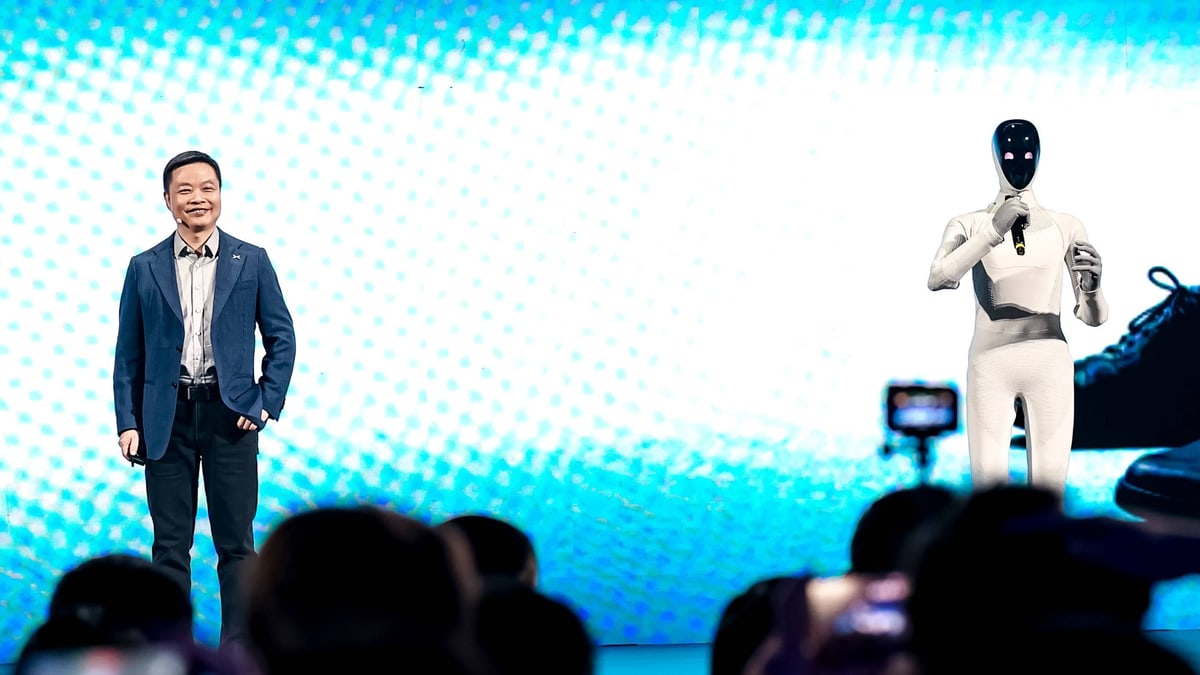
XPeng, the Chinese electric-car maker that also builds robots, showed its IRON humanoid robot at its eighth AI Day in Guangzhou on Wednesday, Nov. 25. Humanoids are robots built in a human shape, usually walking on two legs. XPeng calls the showing the first public debut of IRON in its advanced general-purpose form. In September, the company said the first robot of that kind had walked off its new production lines. The company says IRON is scheduled to begin training as a store assistant in XPeng's own shops between January and March 2027, with its official public release targeted for April to June 2027.
XPeng says IRON has more than 1,500 touch-sensing points, covering more than 80% of the key areas of its body, and runs its AI on three of XPeng's own Turing AI chips. The company says the robot can find its way around on its own, take tasks by voice or through an app, charge itself and report when something goes wrong.
XPeng plans to make money from IRON by selling the robot along with software subscriptions, and the company is building an open platform where partners can download skill packages and develop new skills for their own businesses. To support the robot's development, XPeng says it has set up what it calls a Robot Data Factory. It reuses data-handling and testing tools XPeng built for its cars and covers more than 250 situations and 15 kinds of jobs.
XPeng says its cars and its robots share the same computing, data and control technology, and the event also covered its cars. XPeng says it has a permit to run trial driverless service in Guangzhou and has begun tests carrying passengers with no driver. It plans trial service in selected areas by the end of 2026, and YOYO-01, its first self-driving taxi built for commercial service, is scheduled for release in 2027. XPeng says it will supply the cars and driving software to partner companies that run the service.
XPeng also says a new driving feature is scheduled to start reaching its cars in a software update in December 2026. When the driver lifts off the accelerator, the feature reads the road ahead to decide how strongly the car slows and how much energy it puts back into the battery. XPeng says that in its own tests in heavy city traffic, the feature added 12.4% to usable driving range, compared with having that energy recovery switched off.
Every figure about IRON comes from XPeng. In September the company said it planned to start mass production by the end of 2026 and to begin sales and deliveries in China and other countries in 2027. It has not given a price or said how many robots will work in its stores.