
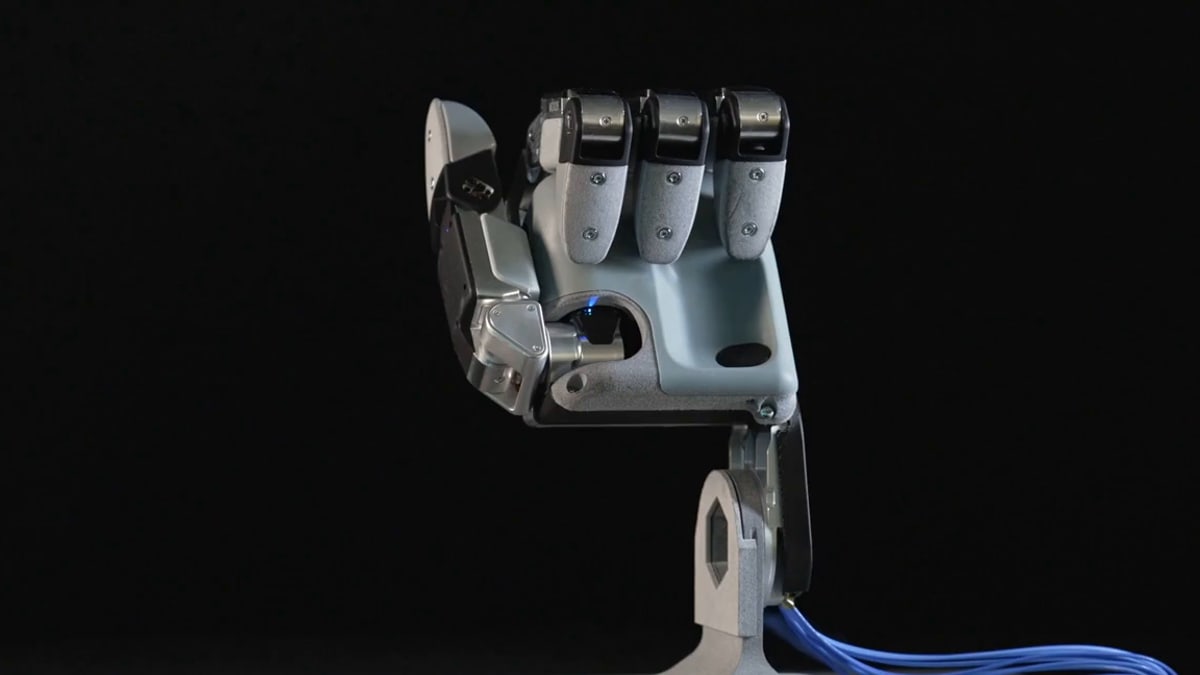
Boston Dynamics has given Atlas, its robot built in a human shape, a new hand, and it has only four fingers. The company showed the hand on Oct. 1 and says it was built for real work in factories and warehouses: gripping a power drill and pressing its trigger, turning a part around in its fingers, and catching hold again when an object starts to slip.
Leaving out the pinky was a deliberate choice. Boston Dynamics says adding a fifth finger would mean three more motors, along with extra cost, bulk and more parts that can break, and the team decided the added skill was not worth it. Before settling the question, the company's technology chief asked engineers to tape their pinky and ring finger together for a day and report what they could no longer do. Afterward, the team agreed to drop the pinky.
The hand is about the size of a large human hand, and the company says it is about as strong as Atlas's old hand, which the company says was strong enough to carry a loaded mini fridge. It can move in nearly twice as many separate ways as that old hand, and pressure sensors across the fingertips and palm let the robot feel light touches. Boston Dynamics also designed it to be built in large numbers and repaired cheaply.
Boston Dynamics also built the hand around how the robot will learn to use it. Boston Dynamics built the hand so that a computer simulation can copy its motion closely. The company's plan is to let the robot practice in the simulation by trial and error, with a reward for getting it right, and then carry those skills over to the real machine. The company says Atlas already learns to keep its balance this way, and that recordings of people wearing sensor gloves while useful, miss the split-second grip and force control a hand like this needs. It calls its first results with the hand promising.
So far, no one outside Boston Dynamics has tested the hand. The company's video mixes clips it says show the robot working on its own with clips where a person was steering it remotely, as with a remote control, plus computer-simulated scenes. The company has not said when the new hand will reach Atlas robots at work, how often it succeeds at tasks like these, or what it costs.