
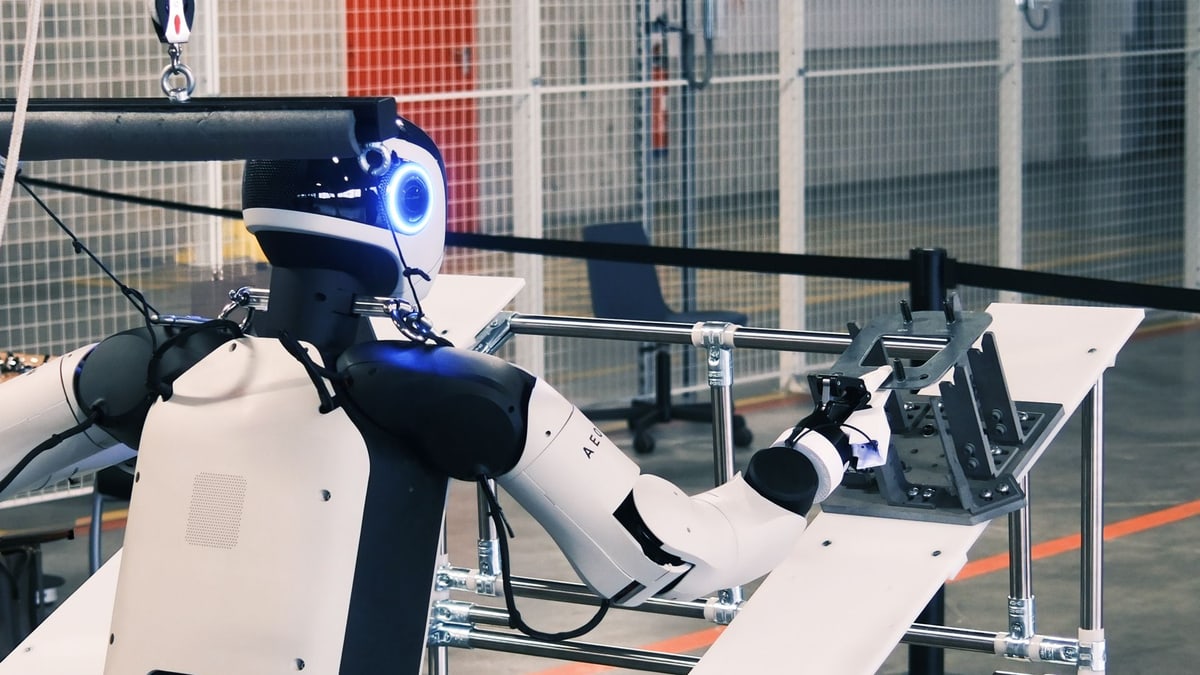
Volvo Cars says it has brought AEON humanoid robots, machines built in a human shape, to its car factory in Ghent, Belgium, where they are being trained on real factory tasks. The robots come from the Robotics division of Swedish technology group Hexagon. Ghent is the first Volvo Cars plant to try humanoid robots, the carmaker said on Nov. 26.
Volvo says the aim is for the robots to take on some of the most physically demanding work and make jobs easier on employees' bodies. Fixed robot arms have long been part of car making and are excellent at steady, repeated work in one spot, the company says, but some physically demanding tasks need more flexibility than a fixed arm offers. "AEON's humanoid design means it can fit into our production as it is today, alongside our teams and existing automation," said Magnus Nilsson, Volvo Cars' chief manufacturing officer.
AEON is 1.65 meters tall (about 5 feet 5 inches) and weighs 60 kilograms (about 130 pounds). Instead of feet, it moves on wheels, at up to 2.4 meters a second (about 5 miles an hour), which Volvo likens to the pace of a light jog. It can carry 10 kilograms (about 22 pounds) and uses cameras and sensors to see its surroundings and handle parts.
Volvo's own team trains the robots together with Hexagon by having each one copy how a task is done. The first task is placing parts into two holders with high precision. As each step is proven, the team plans harder work: handling several parts, moving around the production area and working with the plant's automated machines.
More AEON robots are due in Ghent for a factory pilot in the first half of 2027, when they will take on a wider range of tasks. Volvo says the aim is to use them in real production from mid-2027, so for now they are still in training, working on real factory tasks but not yet part of production. "The purpose of humanoid robotics is to deliver business value to our customers," said Arnaud Robert, president of Hexagon Robotics.
Volvo has not said how many robots are in Ghent today or how many will arrive in 2027, what they cost, or how often they get the first task right. Nor has it said whether the robots will change any jobs at the plant.